My Watered Garden

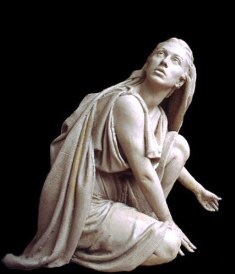
“Woman, why are you weeping?”

Easter should be the feast most unclouded by grief and heartbreak. Even nature seems to break forth in an unmatched “Hallelujah” as the spring is gently unveiled through flowers, zephyr, and relentless birdsong. After all, this octave of Easter is “the day that the Lord has made (Psalm 118).” Today, death is utterly vanquished by the breath of God that runs through previously asphyxiated lungs. The sins that bored literal holes into the hands and feet of the Creator are rendered powerless by a love that goes to Hell and back for the beloved. Bitterness is washed up in the sweet water that flows from a pierced heart and into the ocean of mercy.

THIS is the day the Lord has made. Amen, Hallelujah! And yet, the first words to come from the mouth of the risen Christ in John’s Gospel are, “Woman, why are you weeping?”

Of course, the answer is quite simple. Mary weeps because she believes that her Teacher, the one who she believed to be the Messiah, is now lost to her forever. She weeps because she doesn’t know that He is alive.

2000 years later, I hear the Lord asking me the same question more frequently than I care to admit. “Larisa, why are you weeping?” My reasons tend to be far less noble than Mary’s cause to cry. And yet, my tears tend to have the same source that Mary’s tears had as they watered the garden dirt on that first Easter Sunday. I don’t really know that He’s alive.

Of course, I believe in the Resurrection. I can rattle off every Catholic Answers Live proof for the Resurrection and walk you through a step-by-step analysis of the Shroud of Turin in under two minutes if I don’t come up for air (thank you, forensic science class in junior year, for the shroud project). And I also have enough Faith to supernaturally accept the ultimate mystery of Christ’s Resurrection and our salvation. 2000 years of Church history and intellectual tradition really should give me a step up on Mary Magdalen, who had no knowledge of the Resurrection when she was crying on Sunday. And yet, if I really grasped the Resurrection, if I lived every moment with the confidence that my redeemer lives, would I be so caught up in these little things? Would I be so afraid of myself and the decisions I make with prudence and proper discernment? Would I be crying in dread of the opinions of others? Would I be fixated on how I look and how I am perceived, stressed over scheduling and finances?

Life has taught me what Good Friday looks like. Life has definitely taught me what it is to live in Holy Saturday. But I am in need of deep conversion on Easter Sunday. I need to turn away from the empty tomb and into the eyes of the One who calls me by my true name. I need to be taught by Rabbouni.

Should I know better than to be so concerned with passing things? Yes! Jesus Christ is alive and because He lives, nothing else matters. But while I am so impatient with myself and my lack of trust, the risen Victor is still the tender physician that He was when He first exorcised the seven demons through the waters of my baptism. Teachers in the Church speak of the sacredness of tears and how they can actually be a gift. Even when my tears are imperfect, Jesus still meets me in those moments of sorrow. “Woman, why are you weeping?” He asks. Sometimes my reasons are silly. Other times, they are more like the tears of His mother, tears which come from a heart that knows that Resurrection is coming, but which still breaks over the suffering of those I love.

Regardless of my tears, regardless of my answers to His questions, His answer is always the same. He will always stoop down to my tear-streaked face, even when I should be happy. He will always wipe away those tears with His scarred hand. He will say my name with the same love and gentleness that He had when He placed me in my mother’s womb. He will teach me what it is to live as a resurrected creature until the night of this world breaks into endless dawn and the glory of Sunday is no longer mingled with the tears of Friday.

Until then, my vision of the eternal garden will be blurred. But even when my eyes are too full to recognize the new Adam, He will always see me as His own.
Daily Saturday

Before we start today’s post, I need you to stop and think about what the rest of your day holds. Is this the only thing you plan on reading today? If the answer is yes, I need you stop right here. Please click on this link for today’s Office of Readings and scroll down to what is titled, “Second Reading.” This reading is one of the most beautiful texts the Church offers us for the entire year. I would be ashamed if this blog post deprived you of the opportunity to let those words from an ancient homily penetrate your heart and fill you with awe. When you’re done reading, you can come back to this pithy post if you have time.

Do you have time for both? No? Get out of here and go read.

You do have time? Hi there! It’s lovely to chat again.

“There is a great silence on earth today, a great silence and stillness.” Those words from the opening of that Second Reading are what make Holy Saturday so beautiful. Yesterday, we entered the noise and chaos of the sinful world that murdered its own Messiah. Today, that noise is replaced by a deep liturgical silence. The entire universe holds its breath as twilight nears and glory approaches. Glory approaches, but has not yet arrived. This is Holy Saturday: The increasing tension between victory and triumph, the flutter of the wind about to pull back the final page, the joyous dirge.

And isn’t this where most of us spend the majority of our lives? We’re no longer on Calvary at the height of our suffering. But we’re certainly not in Easter either. In some ways, the hush of Saturday is worse than the wail of Friday. At least on Good Friday, it’s obvious that you’re racked with sorrow. Holy Saturday brings a quiet anguish as you find yourself still reeling from the pain of Friday but without knowledge of when that pain will be healed.

I see Holy Saturday quite differently after being in lockdown last year. Last spring, we lived in the world that the apostles knew on Holy Saturday, a world separated from His presence. For months, we couldn’t feel Christ’s healing touch in the Eucharist or hear His tender words in the Confessional. I still remember how jarring the empty tabernacle used to be on Good Friday. In 2020, it was normal.

But my parish put their tabernacle in the window adjacent to the church parking lot. I would drive to that parking lot and get as close to the window as I could. I would genuflect on the cold muddy ground and find peace before the red candle that assured me of His Body’s presence even though I couldn’t see or receive Him.

Because nothing else was really going on in my life, I went almost every day. Every time a new piece of news re-shattered my heart and brain, I would go to the window and tell Jesus about it. I would go and feel the hot tears on my cheeks that expressed how desperately I wanted to receive Him and how desperately I wanted the pandemic to end. I would stare at the tabernacle for as long as I could and then drive away desperately praying, “Don’t leave me. Please don’t leave me.”

He never did. He never has. Just as Christ spent Holy Saturday descending into Hell and leading the righteous into Paradise, He was using that time to draw me into a deeper love for the Eucharist and also for the body of Christ right in front of me, my family. And one day, I drove in for parking lot Adoration only to find the Tabernacle missing. It was missing because our parish was finally able to celebrate Mass once more. He was not there, for the Church had risen. That first Mass was the most beautiful one in my entire life.

Today is Holy Saturday. You can’t demand that the sun change its location and make it a different day. You can’t go into the past and change what has led you into this season of seemingly endless suffering. But while you can’t choose the calendar date, you can choose how to suffer. You can choose to be consumed by fear and by self-pity, hating the stagnant waters you wade in. Or you can choose to remember that Christ Himself promised to rise on the third day. You can remember that beneath these waters, the Lion of Judah’s paw is stirring a whirlpool as His roar wakes the dead and sends such a shudder through Satan that it forever undoes him.

And if that seems too good to be true, that’s ok. You can still be afraid. You can still be weak. As Mary Magdalen prepares to walk to the tomb, she’s not preparing to meet her risen Lord. She’s preparing to anoint a corpse. But she’s walking towards Jesus rather than keeping to herself. And that is the key to holiness. So long as we walk forward, Jericho will come crashing down.

Silent Friday

Tomorrow night’s Easter Vigil could be given the title, “Night of Music.” In the black of night, Christ’s glory will shine like the day and the world will be created anew. Music is one of the most perfect ways that humans can experience and enter into the harmony of the Trinity, the perfect balance for which the world was made. Tomorrow, the church walls will shake with the blare of trumpets and the sung proclamation of the Resurrection.

But we cannot know the glory of music if we have not first experienced its absence. Today we encounter the opposite of music, which is not silence, because silence is an invitation for created beings to step into the unending song of the Creator. The opposite of music is noise. Good Friday is the noisiest day of the year.

The mob roars for the crucifixion of an innocent man. The vulgarity of the soldiers ceaselessly stains the air of Jerusalem. Women wail, demons laugh, and the hammer screams against the nails.

So much noise, so much action. And yet there is one voice that remains so silent on Good Friday that your first instinct is to scream. That is the voice of the Father.

We can cover up Good Friday all we like with whitewashed crucifixes and shallow homilies and Filet O’Fish as our only meal of the day. But we cannot escape the gaping reality of evil, an evil which seems to win on this dark day. Perhaps more shockingly, we cannot escape the reality that the Father allows this evil. Over and over it is Jesus’ obedience to the Father that is emphasized in His death. The omniscient Father watches as His only begotten Son is betrayed, beaten, and mocked. He is there as Jesus is scourged until His entire body is an open wound. He hears the sound of the thorns seeping into His skin. He allows Him to carry a giant Cross, be stripped naked, bored through with nails, and left to suffocate to death.

Light watches light drain from Light’s eyes. The true God watches the true God breathe His last. A Father hears His child call out, “Why have you abandoned me?” And He does nothing.

Good Friday is precisely why I used to struggle to accept the love of the Father. John 3:16, “For God so loved the world that He gave His only Son,” is really niche on a coffee mug. It’s almost sickening when you watch Mel Gibson’s The Passion of the Christ and realize what giving the Son really entailed. How am I supposed to respond to that love? How can I receive what I can never repay? How does it make sense that God would become man and die at the hands of men for love of me?

It doesn’t make sense. But it doesn’t have to.

In the final paragraph of C.S. Lewis’ Till We Have Faces, the main character writes,

I know now, Lord, why you utter no answer. You are yourself the answer. Before your face questions die away. What other answer would suffice?

The reason why I receive no answer to my questions is because the Father has already spoken His Word to me. That Word hangs on a tree, skin torn to shreds, life poured out, water pouring from His spear-stabbed heart. It doesn’t matter what I have done or failed to do. The Father has already given His own, His first love, to ransom me. It is finished.

Dear soul, the question today is not why the Father loves. The question is whether you will trust Him without putting limits on His mercy or His providence. Will you allow yourself and all your brokenness to be embraced and transfigured by the God who witnesses the murder of His Son and makes it into something good?

This Father of Christ’s, this Father of ours. He makes all things new. Tonight, the clang of the strepitus at Tenebrae will signal the close of today’s noise. A hush will fall over the earth, as God’s Word remains silenced by our sin. But keep going. For tomorrow night, that Word will roar.

Spousal Thursday

“Let him kiss me with kisses of his mouth, for your love is better than wine.”1

This opening verse of the Song of Songs is on the lips of Mother Church tonight. This is the night when the myth of Cupid and Psyche becomes the true myth that enters human history and frailty. In the story, the god Cupid visits the mortal Psyche in complete darkness so that she will not be struck dead from fear at his unfathomable beauty. Just so, Jesus Christ, the Godman, hides Himself in the form of bread and wine as He visits His beloved Bride, the Church. We are wounded creatures so afraid of marvelous light. Therefore light becomes so small that we hold Him in our hand and taste Him on our tongue. The strength that holds the universe taut becomes indescribably weak so that He can nurse us with His own power.

“Why is tonight different from all other nights?” This question sung at every Passover Seder is met with an even more glorious answer as the mystery of Christ’s Body and Blood are presented to the human race. Tonight, the lies that enslaved you and left you believing that you are alone and unwanted are shattered by His perfect humility. Tonight, the weight that you carry is no longer yours to carry alone. Tonight, He becomes one with you.

Tonight, He begins to lead you out of Egypt. But you must give Him permission to fight for you and open the sea, that is, His very heart that will be torn open by a lance in mere hours. Tonight, you must heed Moses who urges you to choose life and not death. Because the kiss of Old Testament poetry is not the only kiss bestowed tonight. Judas will kiss his master and friend, but it is a kiss of betrayal. Satan will strike at the future head of the Church, Peter, the strong, fearless man made weak by a little girl. Every one of the feet washed by the Master’s hands will run away. Every friend embraced in the Eucharist will disappear. As he bolts through the trees, the young man’s nakedness lays bare our fickle, distrusting hearts. The One who offers His kiss to humanity is met with only spit from the lips of His creatures.

Tonight, we must come to terms with the fact that we are the ones who will mock and spit on Jesus before the High Priest. We are the ones who will condemn Him and forget His goodness. We are the ones who will beat Him, scourged Him, and crown Him with the thorns of our sin.

But we must not be like Judas and let our sorrowful, disgusting story end there. Tonight, we can kneel beside our Spouse in the garden, holding His hands that are stained red with bloody sweat. At the altar of repose, we can join our feeble surrender to His perfect offering to the Father. Tonight, as we enter the mystery of Gethsemane, Jesus will teach us what it is to be a Son fully alive in the Father. He will teach us perfect obedience. He will teach us perfect grief.

And as He stands to meet Judas, He will teach us perfect love.

Why is tonight different from all other nights? Because tonight God’s heart is broken by a kiss.

1- I’ve been writing a lot about Christ the Bridegroom over this last week. Because we live in a culture that is so confused about love and marriage, it can be strange and maybe even feel irreverent to read. But this is an aspect of Catholic spirituality known as bridal mysticism. It originates with God Himself, who through Old Testament passages in books like Isaiah, Hosea, and Jeremiah, as well as the words of Christ and the book of Revelation, reveals Himself to be the lover and spouse of the human race and therefore of each human soul. This spirituality is notably developed by St. John of the Cross and St. Bernard of Clairvaux, two men whose lives beautifully model Christ’s masculine soul and unrelenting sacrifice. This isn’t a form of prayer that brings God into human terms so we can make him sound like he’s a boyfriend we can write crappy love songs about and play on Christian radio as “art.” Rather, this is an ascent of the human soul to the bosom of the Trinity, the perfect communion of love that all human love points to.

Superspy Wednesday

*chugs espresso, slams down coffee cup*

Welcome to the Hump Day of all Hump Days. Today, as you know, is Wednesday of Holy Week. But we don’t just call today, “Wednesday of Holy Week.” The Catholic Church is too adept at nomenclature to settle for such a boring title. No, today is Spy Wednesday.

As fun as the name is, it’s also heartrending. Today, our Gospel tells of Judas’ furtive journey to the Pharisees and his schemes to betray Jesus. The human condition is on ugly display today as we witness the seduction of material wealth, a greed that we have all fallen prey to in some shape or form. We weep over the fickleness of friendship and gasp in horror at the atrocity that the demon of betrayal truly is. Today, our hearts must be convicted of our own stupidity when it comes to matters of the heart and worship. We too have been spies with Judas, willing to tear others down to reach happiness, and perhaps even willing to deny Christ, so long as that denial secures our own comfort and satisfaction.

But Judas is not the only spy at work on this Wednesday. It would be dangerous for us to only focus on Satan’s active role in humanity, lest we become overwhelmed by the filth experienced in the common human experience. Yes, the Deceiver is well aware of human weakness and is a master at exploiting our sickness for his own wily gain. But nobody knows the human heart better than the Son of God. In today’s Gospel He is the ultimate spy, as we read:

The disciples approached Jesus and said,
“Where do you want us to prepare
for you to eat the Passover?”
He said,
“Go into the city to a certain man and tell him,
‘The teacher says, My appointed time draws near; 
in your house I shall celebrate the Passover with my disciples.”‘“
The disciples then did as Jesus had ordered,
and prepared the Passover.

Matthew 26:17-19

We should be taken aback by the cryptic nature of Jesus’ instructions. Ok, maybe we shouldn’t be that shocked, because Jesus can be confusing at times. But the disciples have asked for a one word answer to a simple, geographic question, “Where do you want us to prepare the Passover?” Rather than reply as they expect Him to, Jesus responds with these lengthy instructions to find a certain, unnamed man at a certain, unnamed house. In Mark’s account of the Gospel (The one read on Palm Sunday this year), we are told that Jesus only sends two disciples away with these instructions. Why all this secrecy?

The answer is simple and yet one that changes the entire course of Salvation: Judas can’t know ahead of time where the Passover will be held.

If he knows, he can have the guards come to the house where Jesus is staying. It is essential that that does not happen. Because it is at the Passover meal that Jesus will institute the Eucharist and give humanity the new covenant, the offering and consumption of His Body and Blood until the end of time. This has vital theological ramifications, because the flesh of the Passover lamb must be consumed in order for the sacrifice and covenant to be fulfilled. If Jesus is the fulfillment of the Passover sacrifice, slaughtered on the Cross during the twilight brought upon by a solar eclipse, therefore His flesh must be eaten for the act of salvation to be brought to completion. But I’ll let Scott Hahn or Dr. Sri break that down for you.

Covenant theology is crucial. Typology is a fun word to pronounce. But that’s not the only thing on Jesus’ mind as He delivers these instructions for the secret location of the Passover. He is thinking of you. He is thinking of how desperately He thirsts for profound union with you. So gnawing is His hunger that He can’t even wait until you are in heaven to enter into this communion with you. No, the Son of Man sees you in your weakness and pities you. Through the Eucharist, He brings heaven down to you.

The Eucharist is Christ’s final gift to His Bride, the Church, before He lays down His life for her. It is a gift so precious that He guards it at all costs, ensuring that His plans for the great apokalypsis, the precious unveiling of His plan for humanity, are not waylaid by human treachery.

Today, Judas the spy paces back and forth, completely undone by the demon of greed that gnaws all grace away from his soul. But his rage-filled scheming has nothing on the jealous love of your God, who goes to the greatest lengths in preparation for the gift He will give you tomorrow. Tomorrow, He will give you Himself.

Hidden Tuesday

Holy Week is so action-packed that it can almost feel overwhelming. On Sunday, we had our first memorial of the Passion. Yesterday, we anointed the feet of the Suffering Servant. Tomorrow we’ll lean into the grittiness of Spy Wednesday and on Thursday, step into the Triduum.

But nothing really happens on Tuesday.

Our Gospel is taken from the Last Supper, which won’t be celebrated for another couple of days. It’s almost as if the Church is offering us “a deep breath before the plunge,” as Gandalf would say, allowing the goodness of ordinary life to seep back into our hearts after a liturgical season that has been anything but ordinary. The word, “extraordinary,” pales as a description for these next days in Jesus’ life. He knows that He will surrender Himself to the Father with extraordinary trust and offer Himself to us with extraordinary love. These acts usher in an extraordinary beauty that creates the world anew. But Jesus also knows that these upcoming days will be ones of extraordinary pain. He knows that His days are numbered.

Which leads me to the question: What did the Son of God do on His last ordinary day?

In His perfect humanity, Christ saw the created world with an eye so unclouded that He marveled at every grain of sand for the intricate masterpiece that it is. I wonder if He walked alone through Jerusalem early that morning, taking in every palm branch and praising His Father for every breath of oxygen caught and embraced by His sacred lungs. Oh, to be a molecule swept up by the Creator to sustain His created body!

But maybe He wasn’t alone. Maybe He walked with Peter, James, and John, telling them funny stories to lighten their guarded moods, or discussing the trivial, yet precious things that are only understood by close friends. Maybe they went to the market to buy Jesus’ favorite food. During that transaction, He would have looked at the merchant with unmistakable love and sorrow as He pondered the far greater price that would be paid for this soul so soon.

All of this is pure conjecture of course. It’s equally plausible that Jesus withdrew that entire day to be alone with His Father. But something that I think is far less hypothetical is that the Lord would have sought out time with His Mother.

Mary is not written of profusely in the Passion narrative, quiet handmaid that she is. But her agony was unspeakable that week. Mary was no fool like the apostles frequently were. She knew that her Son was the suffering servant from the book of Isaiah1. She had heard from His own lips that He was going to Jerusalem to be crucified. Mary had to stand there in the crowd on Palm Sunday, watching her Son march to His death. Even though He was surrounded by shouts of jubilee, she knew that those shouts would turn to jeers and those palms to clubs. As He entered the city gates, Jesus was entering the jaws of death. And there was nothing she could do about it.

None of this was without her permission of course. It was Mary’s “Fiat” that unleashed the light of the Holy Spirit to conceive the Word. At Cana, Jesus would not begin His public ministry, thus beginning the end of His life, without first receiving her approval. “My hour has not yet come,” He told her then. This week, Mary witnesses the climax of that hour. This week is the culmination of her surrender at the Annunciation as she must say, “Yes,” once more, not to life, but to death. The fruit once only known in the recesses of her very body and soul will be stripped naked and torn to shreds for the world to see. But it is in that unveiling that Her Son will draw the world to Himself.

Once more, the new Eve invites the new Adam, not to disobedience and mistrust, but to perfect obedience and surrender. Tonight, Mother and Son meet in private for the last time. The depth of every encounter between these immaculate souls is one we can only hope to witness in heaven. But it’s beautiful to imagine what this last night is like. Jesus holds her in his sinewy carpenter arms as she sings the lullabies she sang to Him in Egypt. They laugh at old stories and memories from Nazareth. He tells her more about the Father and she weeps with love and joy.

That weeping is one of sorrow too as Jesus confides in her that Judas is the one who will betray Him. He tells her that His heart is already racked with grief at the sins of mankind and with fear at the task to be accomplished. But He also tells her about the glory of Sunday. He promises to appear to her, urges her to be prepared and wait for Him. To which He adds, “As I know you will be.”

He declares to her the words of Isaiah2, “Do not fear…When you pass through waters, I will be with you; through rivers, you shall not be swept away. When you walk through fire, you shall not be burned….For I, the Lord, am your God, the Holy One of Israel, your savior.”

Tears fill His eyes as He kisses her cheek and murmurs, “Because you are precious in my eyes and honored.”

Her voice joins with His to finish the verse, “And I love you.”

Together, they walk outside beneath the moon so near its phase for Passover. The luminous moon that reflects the sun’s glory shines on the last moments of Jesus’ last ordinary day. And as Jesus walks back to His apostles and Mary watches until He has faded into the black night, we are urged to remember that the beauty of daily life is absolutely part of the beauty that saves the world.

1- Isaiah 53

2- Isaiah 43

Prodigal Monday

I’ve always hated Mondays, but for Monday of Holy Week, I’ll make an exception. Our Gospel reading remains the same every year, and it’s a Gospel I never tire of reading.

Six days before Passover Jesus came to Bethany,
where Lazarus was, whom Jesus had raised from the dead.
They gave a dinner for him there, and Martha served,
while Lazarus was one of those reclining at table with him. 
Mary took a liter of costly perfumed oil
made from genuine aromatic nard
and anointed the feet of Jesus and dried them with her hair;
the house was filled with the fragrance of the oil. 
Then Judas the Iscariot, one of his disciples,
and the one who would betray him, said,
“Why was this oil not sold for three hundred days’ wages
and given to the poor?”
He said this not because he cared about the poor
but because he was a thief and held the money bag
and used to steal the contributions.
So Jesus said, “Leave her alone.
Let her keep this for the day of my burial.
You always have the poor with you, but you do not always have me.”

Jn 12:1-81

I love the familiarity with which the reader is welcomed at the opening of this chapter. John reminds us to sit at table with him, an eyewitness. He explains that we know these characters already. Lazarus is the dear friend of the Savior, the man once dead now throwing a party. Martha is busy serving, but now with a renewed understanding of the service for which the Master asks. And Mary? Mary is driving people up the wall as always.

She’s not just sitting at the feet of Jesus anymore. She’s anointing his feet. Her receptivity to His words and life have caused her soul to overflow to the point of action, regardless of judgment from onlookers. And her action is one of total self-gift.

We should stop in our tracks when we hear Judas criticize the lost three hundred days’ wages. That’s almost a year’s worth of work. Why on earth would someone have such expensive perfume? This isn’t Pink Chiffon from Bath and Body Works in an inflated market. No, this oil is Mary’s dowry.

This is her entire livelihood, the thing she needs for marriage, to be cared for in a world where women are widely considered property. This perfume holds the security for her future. Now it runs over a man’s dirty feet, pouring into the cracks of the floor, enveloping an ordinary house on an ordinary Monday. It trickles away until none is left in the jar.

Perhaps we too find ourselves scoffing with the traitor, “What a waste.”

There are so many other ways Mary could have honored Jesus. There are ways that are normal, conventional. Ways that do not require risk and the throwing away of one’s entire livelihood. Mary is beautiful. She has an entire life ahead of her, one with a husband and children. She can dwell in comfort and find a way to profoundly honor the Lord without raised eyebrows and irritated gossip.

Surely Jesus is not asking for her dowry. Surely Jesus does not demand such prodigality and foolhardiness.

Maybe He doesn’t. Maybe He would have been equally pleased with her simply remaining at His feet, or with a simpler offering. But Mary is not anointing the Master’s feet because He has demanded it of her with a threat of punishment. She pours out her life because she can’t help herself. Mary has sat at Jesus’ feet for long enough to know every inflection of His voice and to be captivated by its melody. She has gazed into His face with such a singlehearted longing that she knows every crinkle in His smile and every sorrow in His eye. She has felt the warmth of His presence and has known that there is nowhere else she would rather be than here with Him. This ordinary woman has discerned that the Prime Mover of the Universe has come to her own home, a home that stands as a mere speck of dust in the universe. It seems like such a waste that God would spend His time with Her. But love is never a waste. Love is the ultimate end that all actions pine for, because God Himself is Love.

Here in this Gospel, we stand on Holy ground in the presence of our Incarnate God who dines with His own creatures and in the presence of a woman who gives all and so gains the ultimate prize. Here we stand convicted of the fact that we are the ones who have been wasting our lives on the opinions of others and in our selfish self-seeking and gluttony for control and autonomy. Here we are invited to begin again, to sit at the feet of the Master, to hear His gentle voice, and to be so overcome by love that we hold nothing back, but offer our entire selves and even our carefully planned futures to the God who loves us.

In a matter of days, we will see that the feet we anointed with so great a sacrifice are lifeless and bored through by a giant nail. And we will realize that we have been deluded to believe that anything we give is wasteful compared to His offering to us.

1 – Full Gospel for today is John 12:1-11

Poet Pierced Through

As a performing artist, there are few moments as surreal and electrifying in joy and terror as that moment before the curtain rises. Audience members have been alerted to exit signs, donors have been thanked, and the overture is coming to an end. You hover between reality and the narrative you are about to enter, desperately trying to calm nerves while praying in gratitude for the gift of performance. Even more curious is that sensation of stillness when you must force your body, petrified for an instant, to step past the wings and onto the stage. But you step onto the stage and no matter what the stage is, whether it’s Lincoln Center in New York City or a ballet studio in Indiana, your tutu brushes past the thick black curtain and you find yourself at home.

For the past five weeks, we have been in intense preparation for the culmination of C.S. Lewis’ “Great Dance,”1 the dance of the liturgy. Through fasting, prayer, and almsgiving, we have readied our hearts to step into Holy Week, into the story that all dance, poetry, music, and paintings point us to. And now, the curtain has risen once more on these sacred liturgies. Now it is time to step onstage.

But maybe you aren’t as prepared for this dance as you believe you should be. Maybe you haven’t put as much effort into Lent as the Lord was inviting you to. Perhaps you’re feeling defeated as you succumb to the same sins once more. Maybe you’ve felt waylaid by sickness or inconvenience (quarantine, anyone?) and haven’t been able to enter into Lent as you have in the past.

If this is where you find yourself, you don’t need to worry. Because the Holy Week liturgies are not only a dance, but a poem. Poetry does not exist primarily for analysis. Above all else, poetry should be experienced, something that “happens to you,” as my Great Books professors from high school explained. This is not a passive experience of art, but an eager receptivity to a beauty which enthralls and longs to wash over the reader or listener.

This week, “Beauty ever ancient, ever new”2 longs to wash over you and make you new. And He’s not waiting around. Whether you’re finishing up the best or worst Lent of your life, it’s go time. This is the week of the Great Dance, the song of songs, the poetry of the True Muse, the Holy Spirit. This is the week when your life can change. Perhaps this is the week when your life must change.

I encourage you to do all you can to enter into Holy Week with your entire heart, mind, and soul. Hold nothing back but offer all to the Father who has offered all to you in the sacrifice of His Son.

But how do you enter into the narrative of Holy Week? A simple way is to pay attention as you read the Passion story at Mass today. What character stands out to you? Maybe it’s a character you relate to or a character you aspire to be. Or a character you despise, only to realize you two aren’t very different. Then pray with and be that character for the rest of the week. Comfort Jesus like that character. Reflect on the way you crucify Jesus like that character and beg for mercy. However the Holy Spirit leads, be not afraid.3

The beauty of the liturgical year is that we’re not just calling to mind an event which took place 2000 years ago. Rather, we acknowledge the direct role that we play in the events of Christ’s final days. We carry palms into the church, only to hear our own voices cry out, “Crucify him!” twenty minutes later. We watch the priest wash feet and hear the voice of Jesus Himself say, “This is my body.” We kiss a Cross, knowing that through the beatific vision, as Christ hung in torment on Calvary, He could see that very action and receive consolation. We light a fire because we know that the light shining from the empty tomb remains unquenched to this very day.

This is our story. It’s a story of atrocious crime and miserable suffering, a story of an eminently rational Creator who loves like a madman, and a story of seeming failure turned to unfathomable beauty. It’s time to own our part in the story. It’s time to beg for forgiveness like never before and gasp with joy at His mercy. It’s time to enter the Great Dance, the liturgy that immolates and beautifies all.

This week, let His poetry happen to you.

1 – From Perelandra. “The Great Dance does not wait to be perfect until the peoples…are gathered into it. We speak not of when it will begin. It has begun from before always. There was no time when we did not rejoice before His face as now. The dance which we dance is at the centre and for the dance all things were made. Blessed be He!”

2- St. Augustine, Confessions

3- This form of prayer is prominent in Ignatian spirituality

March 14th

It’s been one year.

One year ago today, I hugged, HUGGED, my friends from ballet goodbye as we said, “See you in two weeks.” My ankle had been hurting a lot, so I was slightly grateful to have the opportunity to rest for a couple weeks. Little did I know. I walked out of the front door without thinking about it too much, not realizing that I would never walk through that front door as a student. When we resumed classes, the front half of the building had to remain closed.

One year ago today, I drove to the Adoration chapel with angry, hurting tears blurring my vision because my parents had told me that it wouldn’t be wise to go to Mass the next day. One year ago, I sat in that chapel and never wanted to leave. Reading my journal from that Holy Hour still causes heartache as I see my shaky handwriting saying, “I can’t have the one thing that gives value to my life. I have literally nothing left.”

And as we all know, things only became more bleak after those first two weeks.

A few weeks into lockdown, my mom sent me to our parish to drop off donation items for the food pantry. As I walked about the church campus, the silence nearly deafened my soul. Out of curiosity, I walked over to the church door itself. Somehow it was unlocked and I stepped inside. I went over to the Adoration chapel even though I knew Adoration wasn’t permitted at the moment, so the Eucharist wouldn’t be exposed. But I just had to see.

I think most of us panic when we see death. Even a dead squirrel is enough to send me shrieking down the street. I think that the reason why we hate dead creatures, even those we’re not attached to, is because our souls see a dead body and instantly register that something intrinsic to that being is no longer present. “It’s not supposed to be that way,” our hearts and minds scream. Something is missing, something is terribly wrong with a world where the body and spirit can separate.

I opened the chapel door and where my eyes usually fall on my Beloved, I saw a gaping hole in the center of the monstrance. Where I usually saw fellow parishioners or friends in prayer, I saw nobody. That chapel, which had been the center of the universe because of the King’s presence, was dead. Life Himself was gone. Even through the sunlit windows, the room seemed so dim.

So much of my personal life was gone too. Nearly as soon as we entered lockdown, I began to daydream about going back to my ballet school. I pictured walking through the front door, excitedly saying hi to my teachers, hugging my friends, dancing in a real studio and not in my living room. Over and over, I imagined throwing my arms around my best friends, returning to Mass, seeing extended family, all like nothing had happened. The world would return to normal. It had to.

And yet, my first ballet class back in a real studio was deeply strange, to say the least, and for a long time I couldn’t focus because of the anxiety associated with the journey back to normalcy. Mass was so far from what I had been accustomed to. It was last Spring that The Lord of the Rings clicked like never before and I found myself asking alongside Sam, “How could the end be happy? How could the world go back to the way it once was after so much bad had happened?”

The world doesn’t go back to the way it once was. Hearts are shattered, and even when they are healed, they are still affected by scars. We learn from the good and evil of the past, and while we can make amends, we can never reshape what once happened. But praise God for that. Because in just a few weeks, Good Friday will be upon us. And I am so glad that when evil was forever defeated, the world didn’t just slide backwards to a couple weeks before Christ’s crucifixion.

No, our God is not in the business of cutting and pasting. He is the God who writes majesty and glory even from the fragmented horror of deicide. Surely He can restore all that has been lost over the last year.

Last week, when I was home, the Lord used two very concrete events to reveal that He is restoring my heart and desires. With a squinty smile under my mask, I was finally able to walk through the front door of my old ballet studio. One of my teachers was there at the front desk, just as he always had been. Class may be different for now in a world of masks, distancing, and extra cleaning, but it still felt like the same beloved class I had known. Things felt normal and safe. My heart experienced a tender healing.

A few days later, as I was going to Adoration at my home parish, I opened the door and to my surprise, Jesus wasn’t exposed. There was that same lifeless monstrance. But the room wasn’t eerily empty anymore. Because it was as I was walking in that the Eucharist was being placed in the monstrance. As the Host was shut into the monstrance, I was reminded that His Love conquers all and brings light to the darkest places. Even when I too was shut in, He was there. In that moment of glory last week, it was as if Jesus was saying to me, “Daughter, so much has been lost over the last year. But I make all things new. I will fully restore you and all of your loved ones.”

One year ago today, I whispered, “Goodbye,” to Jesus, truly present in the Blessed Sacrament. Today, Father held Him inches from my gaze and declared, “The Body of Christ.”

Amen. Yes, Jesus, I believe.

Pensee on Home

Last week, I was able to go home to Indianapolis on my winter/spring break from ballet. It was such a gift to feel like I could briefly slip back into childhood. I hung around the house with family, screamed and laughed with dear friends, and took ballet classes at my home studio.

Being home led to my asking a lot of questions about what it really is to be, well, home. I had a strange experience going to Sunday Mass at my home parish in Indy. When I had gone at Thanksgiving and Christmas, I truly felt like I was finally home after months of separation. But this time, I found myself missing my church in Cincinnati just a little. The feeling wore off fairly quickly, but at the beginning I felt like I was revisiting the past rather than entering into a present reality.

The truth is that the further along I go in life, the less and less Indianapolis and the places I always called home will actually be just that. And yet, there will always be something uniquely sacred about those places we still call home, even when they begin to slip into an existence merely on a journal page or in a recess of the mind’s memory. That’s why Waugh’s Brideshead Revisited and Cather’s My Antonia, fictional celebrations of nostalgia and reminiscence are so beloved. They reverence a part of the common human experience that is not talked about for fear of seeming sentimental and superficial. And yet, God Himself commands that the Passover be vividly recollected until the end of the world. It is in the bloodiness and beauty of the past that we see God’s glory and providence. And in finding God, we find ourselves.

While not necessarily as high in caliber as Waugh and Cather, at Mass I was reminded of the conclusion of the novel, Turtles All the Way Down, by John Green, where the protagonist states,

You remember your first love because they show you, prove to you, that you can love and be loved…that love is both how you become a person and why.

I would argue that places can be first loves as well as people. I looked around my home parish and saw the spot I was kneeling when my life changed on a retreat in my freshman year. I smiled when my eyes fell on the outdoor fountain where one of my best friends and I had sat and splashed each other while laughing our heads off (we were 15, young enough to know better and old enough to not care). My heart melted at the sight of the adjacent convent, where I have had beautiful, joyful encounters with others and the Lord.

But above all, the Adoration chapel at my home parish is my ever ancient, ever new secret place. It was in that chapel two years ago that the Lord revealed facets of His work in my heart so beautiful that I literally skipped out of the chapel with joy. Today, those desires and that joy is being purified in a way I didn’t expect at the time. The Lord is asking for some things back so that He can give me something even more precious. But I don’t know what that precious thing is yet, so in His gentleness, the Lord put me right back in that same spot at the corner of the chapel. It was there, resting against the brick wall behind the smooth wooden beam that juts out toward the monstrance, that I found the strength to let go two years ago. If I could do it two years ago, I can do it now. But I needed to be in that place of my first love to say yes in the way I’ve wanted to for the last several months.

The place of our first love has profound value, but not infinite value. Human souls though? Those are of infinite value. As I was sitting in Mass, I saw so many people who I have loved over the years and who I know love me. Right after Mass, I saw one of my best friends and was screaming with joy while raiding the church’s coffee supply just like we always had. As I walked to my car after a night out with her and another bestie, the deepest emotion I felt was one of safety and security. There are some people who are home. People whose presence will always be home, no matter how far away life takes you from them.

But if there’s anything we’ve learned in this last year, it’s that the places we love can be locked. People who live down the street from us can feel worlds apart. And yet, there is One who we can turn to and whisper alongside Jane Eyre, “Wherever you are is my home – my only home.” As I knelt in my old spot in the Adoration chapel a matter of hours before driving back to Cincinnati, I asked Jesus, “Where is home?”

His answer was something to the extent of, “Find me, and you will always find your home.”

His Spirit is moving as I sit on my front porch here in Cincinnati. Here, I am home. Wherever that Spirit leads, I can follow, knowing that I don’t need a bird’s nest or a fox’s den as long as I see the face of the Son of Man. Wherever He is, I am home and in the home that is meant for me.

But that doesn’t discredit the fact that a piece of my heart has been forever shaped by the places I grew up, by the people who loved me and still do, and by the Father who works all things for my good. As I pulled shut the door of my old ballet studio, I encountered once again the tension we experience in growing up as we cherish the past and look boldly to the future. When I don’t have words for an experience or emotion, I look to books. As I walked to my car, I whispered the final words from Turtles All the Way Down, “No one ever says good-bye unless they want to see you again.”